Best TMT for Construction | Choose the Right Steel
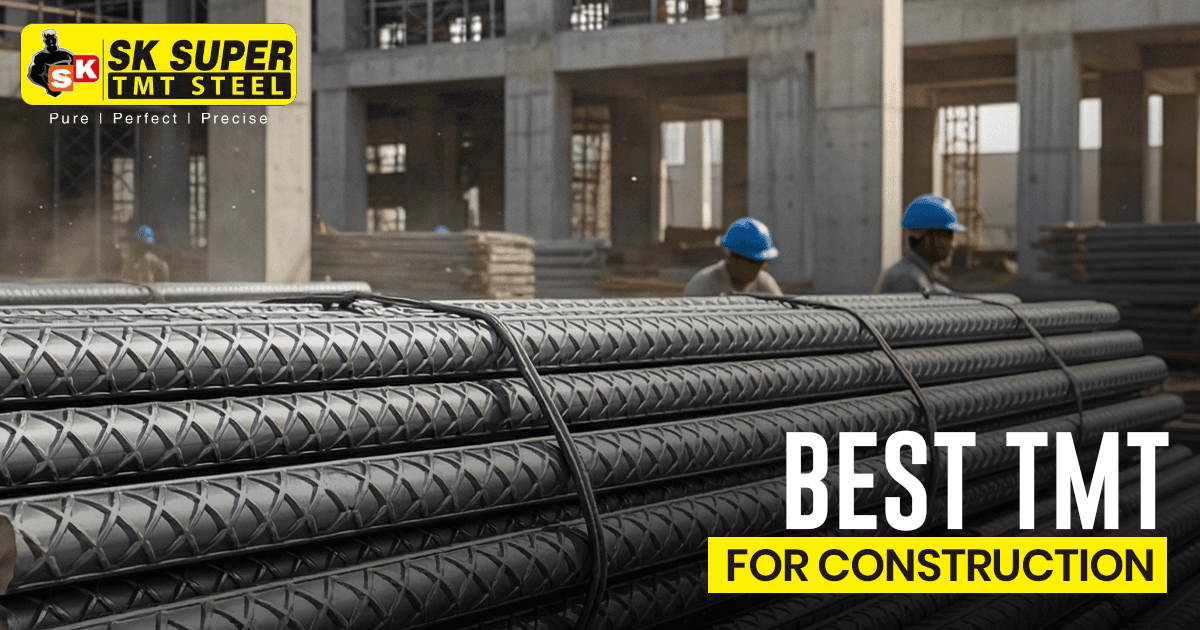
Best TMT for Construction: A Complete Guide to Choosing the Right TMT Bars
When it comes to building a strong, durable, and reliable structure, selecting the Best TMT for construction is an important decision. TMT bars are a fundamental component of reinforced concrete structures, providing the strength and reinforcement required for buildings, bridges, foundations, columns, beams, and other construction applications. The quality of the TMT bar used in a project can influence its structural performance, durability, and long-term reliability.
With modern construction projects demanding better strength, flexibility, corrosion resistance, and consistent quality, choosing the right TMT bars requires careful consideration. A quality-focused TMT manufacturer can help construction professionals, contractors, engineers, and homeowners select reinforcement steel that meets the requirements of their projects.
Why TMT Bars Are Important in Construction
TMT stands for Thermo-Mechanically Treated steel. TMT bars are manufactured through a controlled process that gives them a strong outer surface and a comparatively softer, more ductile core. This combination allows the bars to provide strength while also offering flexibility that is important for reinforced concrete structures.
TMT bars are commonly used in:
Residential building construction
Commercial buildings
Industrial structures
Foundations and columns
Beams and slabs
Bridges and infrastructure projects
Roads and other civil construction works
High-rise construction
Water-related structures
The correct grade and specification should always be selected according to the structural design and applicable standards.
What Makes a TMT Bar Suitable for Construction?
Choosing reinforcement steel should involve more than simply comparing prices. Construction projects require materials that offer consistent mechanical properties and reliable performance. Several factors should be considered before selecting TMT bars.
Important Factors to Consider
Strength: The reinforcement should provide the required yield and tensile strength for the structural application.
Ductility: Adequate ductility allows the steel to deform before failure, which is particularly important for structural safety.
Weldability: Suitable chemical composition can make reinforcement easier to weld where the construction design requires it.
Bendability: Consistent quality helps the bars withstand bending operations during reinforcement fabrication.
Corrosion resistance: Appropriate material characteristics can contribute to longer service life, particularly in challenging environments.
Dimensional consistency: Uniform diameter, weight, and surface characteristics support reliable construction practices.
Standards compliance: TMT bars should meet the relevant Indian standards and project specifications.
Understanding TMT Bar Grades
Different construction projects can have different reinforcement requirements. TMT bars are available in different grades, with each grade offering particular mechanical characteristics.
The appropriate grade should be selected based on factors such as:
Structural design requirements
Building type
Load conditions
Construction location
Applicable engineering standards
Recommendations from the structural engineer
It is important not to select a grade solely because it has a higher numerical designation. The right reinforcement is the one that matches the project's engineering requirements.
Benefits of Using Quality TMT Bars
High-quality reinforcement steel can contribute to the overall performance of reinforced concrete structures when correctly specified and installed.
1. Structural Strength
TMT reinforcement provides the tensile strength required to complement concrete in reinforced concrete construction. Properly designed reinforcement helps the structure withstand the loads for which it has been engineered.
2. Improved Ductility
Ductility is an important characteristic of reinforcement steel. A suitable combination of strength and ductility enables reinforcement to accommodate deformation under demanding loading conditions.
3. Better Bond with Concrete
The surface pattern of TMT bars is designed to provide effective mechanical interlocking with concrete. A good bond between steel and concrete is essential for transferring stresses within reinforced concrete members.
4. Efficient Construction
Consistent TMT bars can make cutting, bending, placing, and tying reinforcement more predictable. This can support smoother execution at construction sites.
5. Long-Term Performance
When the correct steel is selected, properly detailed, and adequately protected within concrete, reinforcement can contribute to the long-term durability of the structure.
Applications of TMT Bars
TMT reinforcement is used across a wide range of construction projects because reinforced concrete is widely used in modern infrastructure.
Residential Construction
From individual homes to apartment buildings, TMT bars are commonly used in foundations, columns, beams, slabs, staircases, and other structural components.
Commercial Buildings
Office buildings, retail spaces, hotels, and other commercial structures require carefully designed reinforcement systems to accommodate their intended loads and usage.
Industrial Projects
Factories, warehouses, and industrial facilities may require reinforcement designed for specific structural and operational requirements.
Infrastructure
TMT reinforcement is also used in various infrastructure projects where reinforced concrete forms an important part of the construction system.
How to Select the Right TMT for Your Project
Selecting reinforcement should be a systematic process rather than a decision based only on brand recognition or cost. Before purchasing, construction professionals should verify the product specifications and documentation.
A Simple Selection Checklist
Understand the structural engineer's reinforcement specifications.
Identify the required TMT grade and diameter.
Check whether the product complies with applicable standards.
Review available test certificates and quality documentation.
Purchase from an established and reliable manufacturer or authorized channel.
Check the material condition when it reaches the construction site.
Store the reinforcement correctly to minimize contamination and unnecessary exposure.
Follow the structural drawings for cutting, bending, spacing, and placement.
This approach can help ensure that the selected reinforcement is appropriate for its intended application.
Importance of Quality Testing
Quality testing is an essential part of reinforcement steel manufacturing. Testing helps verify whether the material meets specified mechanical and chemical requirements.
Depending on the applicable standard and project requirements, important properties may include:
Yield strength
Tensile strength
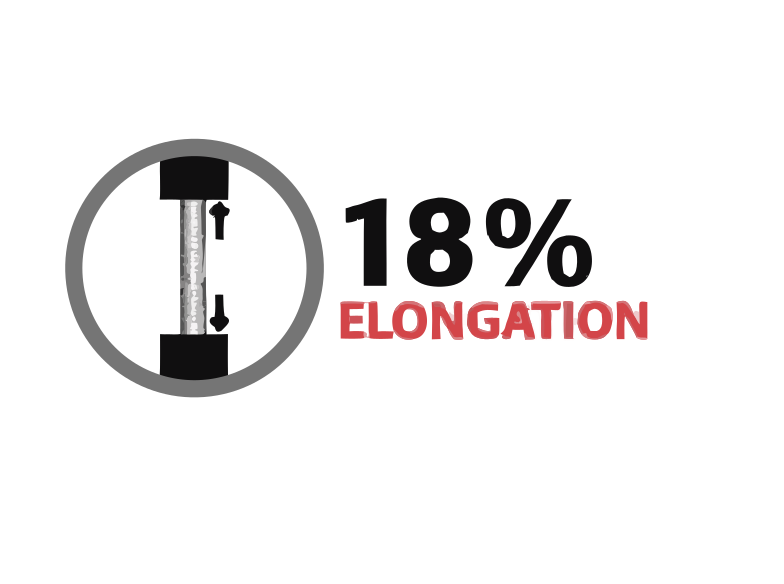
Elongation
Chemical composition
Bend performance
Dimensional characteristics
Mass per metre
Reliable documentation and testing provide greater confidence that the reinforcement supplied to a project meets the required specifications.
TMT Bars and Sustainable Construction
The construction industry is increasingly focused on material efficiency and responsible resource use. High-quality reinforcement can support efficient structural design when used according to engineering requirements. Steel also has the advantage of being recyclable, making it an important material within the broader construction industry's efforts toward resource efficiency.
However, sustainability should always be considered alongside structural requirements. Reducing material quantities without proper engineering assessment should never compromise the safety or performance of a structure.
Why Manufacturer Quality Matters
The manufacturing process plays an important role in the consistency of TMT reinforcement. Controlled production, testing, quality management, and proper handling help ensure that the steel supplied to construction sites performs according to its specifications.
For buyers, contractors, and construction professionals, it is useful to consider:
Manufacturing quality controls
Product testing practices
Applicable certifications
Consistency between batches
Technical documentation
Distribution and supply reliability
Product traceability
A dependable supply chain is particularly important for large construction projects where reinforcement requirements can be substantial.
Build with Confidence Using the Right TMT
The foundation of a durable structure begins with sound engineering and the right construction materials. TMT bars are an essential part of reinforced concrete construction, and selecting suitable reinforcement can support the strength, durability, and reliability of the finished structure.
When looking for the Best TMT for construction, focus on the factors that genuinely matter: compliance with relevant standards, mechanical properties, ductility, manufacturing consistency, quality testing, and suitability for the project's structural requirements. Working with qualified structural professionals and purchasing from a reliable manufacturer can further support better construction outcomes.For projects that demand dependable reinforcement steel, Best TMT for construction should be selected based on verified quality, engineering requirements, and long-term performance rather than price alone.



" height="12.946889755814484px" id="oB0319YsB" transform="translate(13.529 2.329)" width="60.151728601809204px"/><path d="M 0.099 9.89 C -0.007 9.395 0.016 6.636 0.015 5.905 L 0.014 2.696 C 0.013 2.028 -0.078 0.563 0.212 0 C 0.3 0.379 0.277 2.653 0.278 3.152 C 0.282 4.342 0.278 5.532 0.268 6.722 C 0.264 7.41 0.283 8.329 0.204 8.994 L 0.186 8.668 C 0.133 9.113 0.113 9.442 0.099 9.89 Z" fill="rgb(209, 77, 82)" height="9.890378460799184px" id="zpJrjtscj" transform="translate(13.518 3.528)" width="1px"/><path d="M 49.463 4.601 C 50.659 4.569 51.979 4.587 53.181 4.612 C 53.201 4.835 53.242 5.088 53.273 5.312 L 57.18 5.314 C 58.041 5.313 59.735 5.178 60.364 5.782 C 60.637 6.049 60.824 6.391 60.898 6.762 C 61 7.245 60.97 8.635 60.969 9.203 C 60.97 10.254 60.977 11.304 60.991 12.354 C 61.011 15.498 59.643 15.238 57.089 15.251 C 55.58 15.258 54.071 15.25 52.562 15.226 C 52.079 15.225 51.604 15.231 51.124 15.183 C 50.288 13.966 49.274 12.641 48.629 11.311 C 51.425 11.258 54.286 11.389 57.073 11.305 C 57.093 10.608 57.021 9.885 57.04 9.154 C 55.711 9.103 54.363 9.166 53.035 9.144 C 52.204 9.131 51.329 9.23 50.525 9.039 C 49.875 8.885 49.381 8.155 49.363 7.535 C 49.347 6.955 49.196 5.112 49.355 4.647 Z M 36.488 4.582 C 37.783 4.568 39.078 4.571 40.374 4.591 L 40.401 5.291 C 41.735 5.404 43.17 5.274 44.513 5.319 C 45.466 5.35 46.786 5.189 47.515 5.919 C 47.722 6.124 47.87 6.38 47.944 6.66 C 48.199 7.661 48.095 9.338 48.12 10.41 C 48.127 11.144 48.136 11.903 48.15 12.635 C 48.206 15.55 46.053 15.221 43.901 15.233 C 42.503 15.246 41.104 15.244 39.706 15.226 C 39.222 15.227 38.798 15.228 38.316 15.193 C 37.808 14.701 36.116 12.061 35.714 11.365 C 38.426 11.274 41.435 11.38 44.193 11.345 C 44.196 10.626 44.144 9.915 44.155 9.189 C 42.933 9.163 41.52 9.187 40.309 9.189 C 38.004 9.194 36.316 9.475 36.488 6.496 C 36.517 5.995 36.489 5.129 36.488 4.582 Z M 1.334 0.046 C 2.532 0.034 9.143 -0.096 9.775 0.143 C 10.126 0.276 12.072 3.422 12.29 3.93 C 11.29 3.992 10.338 3.943 9.343 3.947 C 7.568 3.954 5.74 3.904 3.971 3.962 C 3.953 5.371 3.949 6.781 3.959 8.19 C 3.982 10.519 3.983 12.848 3.963 15.177 C 2.711 15.244 1.278 15.212 0.012 15.198 C 0.046 11.684 0.001 8.079 0.002 4.555 L 0.003 1.777 C 0.003 1.373 -0.016 0.565 0.043 0.195 C 0.267 -0.001 1 0.048 1.334 0.046 Z" fill="rgb(235, 62, 60)" height="15.253288242454644px" id="F2dJfqavg" transform="translate(0 0)" width="60.9907972633671px"/><path d="M 0.989 0.028 C 2.246 -0.002 3.259 -0.072 4.493 0.248 C 6.84 0.856 7.22 3.415 6.477 5.353 C 6.176 6.138 5.756 6.499 5.1 6.968 C 3.245 7.846 2.041 7.636 0 7.62 L 0 0.04 Z M 1.806 6.449 C 2.777 6.358 3.386 6.345 4.203 5.712 C 4.561 5.338 4.753 5.117 4.865 4.588 C 5.243 2.812 4.516 1.276 2.474 1.277 C 2.309 1.277 1.956 1.274 1.785 1.25 C 1.726 2.677 1.723 5.028 1.806 6.449 Z" fill="rgb(0, 0, 0)" height="7.653002414101778px" id="GLJEt6lYQ" transform="translate(60.419 17.456)" width="6.819424722481701px"/><path d="M 0.022 3.93 C 0.007 3.157 -0.06 2.166 0.148 1.439 C 0.272 1.006 0.591 0.522 1.005 0.316 C 1.259 0.19 1.871 0.07 2.143 0.069 C 3.504 0.062 9.492 -0.137 10.431 0.175 C 11.965 0.609 11.856 2.681 11.753 3.93 C 11.518 3.944 11.319 3.96 11.084 3.95 C 7.389 3.895 3.716 3.949 0.022 3.93 Z" fill="rgb(235, 62, 60)" height="3.952955703824727px" id="kfTHTxs0X" transform="translate(61.851 0.057)" width="11.805634995865079px"/><path d="M 0 0 C 1.534 0.434 1.425 2.506 1.322 3.755 C 1.087 3.769 0.888 3.785 0.653 3.775 L 1.248 3.643 C 1.254 2.893 1.295 1.699 1.009 1.03 L 0.963 0.921 L 0.936 0.952 C 0.942 1.051 0.95 1.113 0.967 1.211 L 0.905 1.255 C 0.8 0.996 0.6 0.498 0.362 0.337 C 0.108 0.165 0.094 0.249 0 0 Z" fill="rgb(209, 77, 82)" height="3.777953857478537px" id="XMgn36LPk" transform="translate(72.268 0.222)" width="1.3745077614623042px"/><path d="M 0.033 0.067 C 1.118 -0.029 3.115 0.02 4.264 0.009 C 5.299 -0.002 6.334 -0.003 7.369 0.006 C 7.866 0.009 8.396 0.007 8.892 0.042 C 9.132 0.059 9.246 0.171 9.385 0.341 C 9.875 1.071 11.385 3.057 11.507 3.789 C 11.411 3.903 11.263 3.888 11.111 3.896 C 7.478 3.983 3.723 3.828 0.078 3.909 C 0.004 2.711 -0.03 1.259 0.033 0.067 Z" fill="rgb(235, 62, 60)" height="3.923219350842854px" id="x5kI24jQs" transform="translate(49.306 0.057)" width="11.507498416877686px"/><path d="M 0 0 C 0.49 0.729 2 2.716 2.123 3.448 C 2.026 3.562 1.879 3.547 1.726 3.554 C 1.673 3.465 1.676 3.472 1.679 3.369 C 1.8 3.402 1.923 3.449 2.043 3.433 C 1.887 3.162 1.844 3.028 1.743 2.737 C 1.75 2.835 1.782 3.007 1.739 3.072 C 1.31 2.215 0.516 1.367 0.087 0.474 C 0.051 0.399 0.039 0.156 0.009 0.036 Z" fill="rgb(209, 77, 82)" height="3.5543617212842946px" id="k5EscSgzj" transform="translate(58.659 0.387)" width="2.1228934429948367px"/><path d="M 1.178 0.024 C 3.642 0.027 6.49 -0.049 8.914 0.055 C 8.921 0.06 8.928 0.064 8.935 0.069 C 8.947 0.078 8.958 0.087 8.97 0.095 C 9.443 0.424 11.337 3.267 11.641 3.891 C 11.315 3.92 11.004 3.924 10.678 3.932 C 8.31 3.911 5.943 3.906 3.575 3.916 C 2.407 3.922 1.182 3.893 0.021 3.93 C 0.02 3.421 -0.045 0.366 0.059 0.122 C 0.336 0.023 0.858 0.034 1.178 0.024 Z" fill="rgb(235, 62, 60)" height="3.9315142588399463px" id="WDhcAM1ri" transform="translate(36.481 0.057)" width="11.641007825561651px"/><path d="M 9.381 0.027 C 11.353 0.146 15.781 -0.695 14.802 2.894 C 14.655 3.434 14.004 3.78 13.516 3.98 C 15.015 4.842 14.429 6.381 15.394 7.568 C 14.756 7.618 14.129 7.6 13.492 7.583 C 13.024 7.51 13.042 5.334 12.443 4.923 C 11.908 4.557 11.753 4.609 11.105 4.626 C 11.1 5.621 11.117 6.629 11.126 7.625 C 10.551 7.631 9.959 7.622 9.383 7.62 C 9.354 5.089 9.353 2.558 9.381 0.027 Z M 11.086 3.435 C 11.968 3.435 12.099 3.458 12.86 3.044 C 13.118 2.806 13.125 2.699 13.139 2.36 C 13.191 1.089 11.958 1.333 11.111 1.281 Z M 19.283 0.02 C 20.067 0.026 20.85 0.019 21.634 0 C 22.327 2.373 23.237 5.271 24.105 7.594 C 23.52 7.646 22.729 7.619 22.142 7.591 C 22.107 7.198 21.725 6.096 21.58 5.665 C 21.455 5.525 19.62 5.602 19.331 5.606 C 19.284 6.03 18.978 7.058 18.873 7.584 C 18.201 7.621 17.625 7.623 16.952 7.619 C 17.037 7.438 17.106 7.215 17.168 7.023 C 17.813 4.991 18.497 2.965 19.033 0.903 C 19.106 0.623 19.178 0.284 19.283 0.02 Z M 20.486 4.412 L 21.24 4.403 C 21.099 3.699 20.681 2.293 20.459 1.524 L 20.368 1.459 C 20.096 2.443 19.871 3.419 19.617 4.404 Z M 3.999 0.024 C 4.975 -0.002 5.54 0.045 6.483 0.227 C 6.352 0.749 6.203 1.084 6.126 1.65 C 4.327 1.118 1.71 1.28 1.766 3.725 C 1.821 6.111 3.125 6.246 5.089 6.284 C 5.128 5.671 5.128 5.242 5.097 4.629 C 4.696 4.608 4.245 4.61 3.839 4.603 C 3.849 4.151 3.84 3.665 3.84 3.209 C 4.47 3.175 5.135 3.191 5.768 3.197 C 6.091 3.208 6.427 3.21 6.752 3.216 C 6.665 4.333 6.793 6.044 6.743 7.279 C 5.075 7.714 2.758 7.989 1.287 6.864 C -0.295 5.652 -0.403 2.702 0.877 1.239 C 1.698 0.3 2.813 0.117 3.999 0.024 Z M 35.604 0.054 L 40.382 0.042 L 40.384 1.474 C 39.414 1.511 38.325 1.494 37.346 1.499 C 37.357 1.994 37.347 2.518 37.346 3.016 L 40.138 3.019 L 40.124 4.315 C 39.41 4.327 37.984 4.376 37.313 4.322 L 37.312 5.115 L 37.309 6.184 C 38.358 6.206 39.475 6.178 40.529 6.168 L 40.536 7.601 C 39.019 7.661 37.16 7.606 35.606 7.614 C 35.601 5.104 35.633 2.56 35.604 0.054 Z" fill="rgb(0, 0, 0)" height="7.657614576777468px" id="aC7EIxli2" transform="translate(34.067 17.458)" width="40.53556466895793px"/><path d="M 10.306 0.019 C 10.761 -0.017 11.654 0.009 12.131 0.01 L 15.956 0.012 C 15.971 1.14 16.051 2.72 15.96 3.812 C 15.498 3.887 14.436 3.861 13.917 3.859 L 10.356 3.848 C 10.286 3.374 10.185 0.363 10.306 0.019 Z M 0 1.155 C 0.362 1.127 0.602 1.124 0.965 1.132 C 2.25 1.141 3.534 1.144 4.819 1.138 C 5.467 1.138 6.3 1.116 6.932 1.154 C 6.981 4.785 7.112 4.996 3.393 4.941 C 3.134 4.937 2.876 4.921 2.62 4.891 C 1.835 3.895 1.095 2.865 0.403 1.804 Z" fill="rgb(235, 62, 60)" height="4.947254983618617px" id="SQnywu66N" transform="translate(18.193 5.72)" width="16.00309029185679px"/><path d="M 0 0.027 C 0.362 -0.001 0.602 -0.004 0.965 0.003 C 0.47 0.278 0.717 0.325 0.403 0.675 Z" fill="rgb(209, 77, 82)" height="1px" id="sjqv5Yf0v" transform="translate(18.223 6.834)" width="1px"/><path d="M 0.874 0.021 C 2.093 0.018 4.173 -0.046 5.307 0.065 C 4.831 0.883 4.008 2.197 3.438 2.959 C 3.253 3.277 3.017 3.577 2.77 3.85 C 1.96 3.904 0.895 3.866 0.065 3.855 C -0.014 2.98 -0.015 0.958 0.029 0.064 C 0.309 0.025 0.592 0.027 0.874 0.021 Z" fill="rgb(235, 62, 60)" height="3.878413764234791px" id="vG9IdGNOz" transform="translate(4.669 5.732)" width="5.3066857493778965px"/></g></svg>)